
Tutorial Categories
Last Updated: January 16, 2026 at 14:30
Why Booms Always Feel Justified—and Busts Feel Obvious Later - Behavioral Finance Series
Why do booms feel unstoppable—and crashes seem obvious only afterward? Markets are driven by human psychology, contagious stories, and social proof. During booms, overconfidence and compelling narratives make sky-high valuations feel justified. After the bust, hindsight bias rewrites history, making mistakes appear inevitable. By understanding these patterns and using rules, scenario planning, reflective journaling, and valuation limits, investors can participate in booms without falling prey to herd behavior or emotional traps.
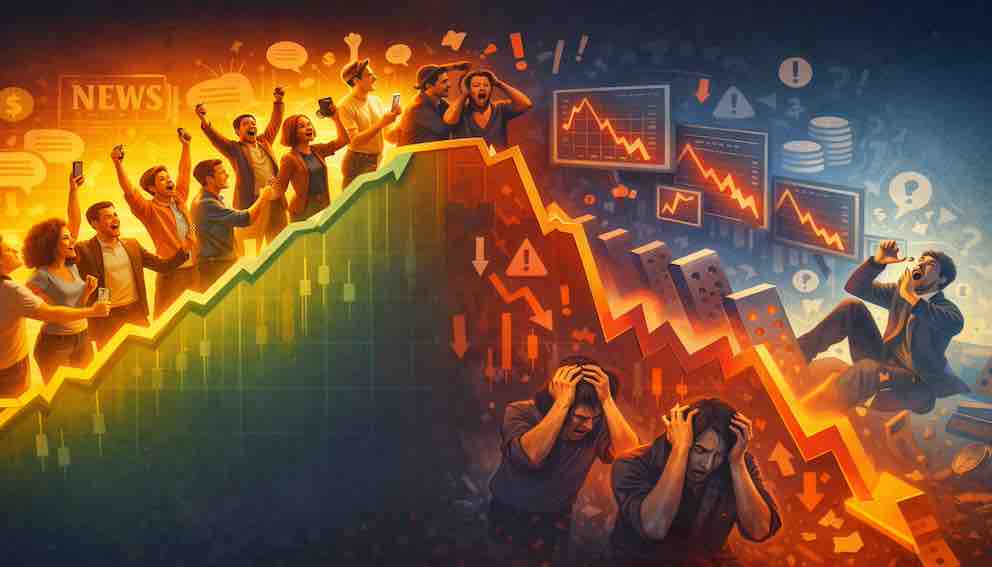
Imagine walking into a party where everyone is laughing at the same joke. At first, it feels funny. But later, when you replay it alone, the joke seems silly. Financial markets work in much the same way. During booms, rising prices, soaring valuations, and widespread optimism feel completely justified. After a bust, the mistakes seem painfully obvious. This paradox—why booms feel right in real-time and busts feel obvious only in hindsight—is at the heart of behavioral finance.
In this tutorial, we explore why investors feel confident during booms, why errors seem “obvious” only after a crash, and what disciplined investors do differently to navigate these cycles. We’ll use historical examples like the Dot-Com Bubble and the 2008 Financial Crisis, modern cases like crypto rallies, and practical strategies you can apply in your investing journey.
The Psychology of Boom-Time Confidence
Overconfidence, Confirmation Bias, and Vivid Stories
During booms, investors naturally become overconfident—they feel they know what’s happening and that the trend will continue. Confirmation bias amplifies this feeling: we notice only the information that supports our beliefs and ignore warnings.
- Dot-Com Bubble (1997–2000): Investors were captivated by the story of a “new economy.” Even unprofitable companies with sky-high valuations seemed rational because every analyst, friend, and news headline reinforced the optimism.
- Housing Boom (2004–2007): Rising home prices made mortgage risks seem negligible. People assumed prices would keep going up, despite warnings about subprime lending and leverage.
- Crypto Rally (2017): Bitcoin and other cryptocurrencies soared. Everyone seemed to know someone who made a fortune, making it easy to ignore abstract risks like volatility or regulatory uncertainty.
The availability heuristic makes vivid examples (your friend who made a fortune) feel more informative than dry statistics. Success stories stand out; warnings fade.
Narrative Economics: Stories That Spread Like Viruses
Robert Shiller calls this Narrative Economics. Booms are often fueled not just by numbers, but by contagious stories—“the internet will change everything,” “housing always goes up,” “crypto is the future.” These narratives feel rational because they provide a framework that explains rising prices.
The narrative itself becomes a justification: when everyone believes the story, the market seems sensible—even when valuations are extreme.
Minsky’s Financial Instability Hypothesis
Hyman Minsky provides the economic backbone to this psychology. His Financial Instability Hypothesis explains why booms feel justified and busts feel obvious:
- Stability breeds complacency: When things are calm, investors take more risks.
- Rising risk-taking fuels the boom: Leverage and speculative bets grow, making the system more fragile.
- Fragility leads to bust: When confidence collapses, losses amplify quickly.
At every step, the market seems rational. Only when the fragile pyramid of confidence falls does the bust appear “obvious.”
Why Busts Feel Obvious: The Power of Hindsight
After a crash, the same narrative that seemed reasonable now looks foolish. This is due to hindsight bias, but also to deeper cognitive processes:
The Narrative Flip
After a bust, the prevailing story flips: the belief in “permanent prosperity” gives way to “inevitable reckoning.” Suddenly, all the warning signs seem to fit together perfectly, as if the outcome was obvious all along. Historian Niall Ferguson observes, “After the bubble bursts, there’s never a shortage of people who saw it coming.”
The Erasure of Uncertainty
In real time, the future is uncertain—a cloud of probabilities. After the fact, our brains erase this uncertainty, making the outcome seem inevitable. This is called creeping determinism: the past is rewritten to make the crash appear predictable.
How Consensus Builds During the Boom
Boom-time confidence isn’t random—it is constructed through social and informational mechanisms:
| Mechanism | How It Works | Why It Feels Justified |
| Consensus Validation Loop | Rising prices validate the bullish story, attracting more believers, which pushes prices higher. | Creates a self-reinforcing cycle: price rises confirm your beliefs. |
| Shifting Goalposts & New Metrics | Traditional valuation fails, so new metrics emerge—“price-to-eyeballs” in the dot-com era, “future adoption multiples” in crypto. | Gives an intellectual framework to rationalize extreme valuations. |
| Sanitization of Dissent | Bearish analysts are dismissed, sidelined, or ignored by media. | Investors see only confirming voices, making the bullish case appear unanimous. |
Expert vs Novice Behavior
Rules-based investors differ from emotion-driven participants in key ways:
| Behavior | Novice/Emotion-Driven | Expert/Rules-Based |
| Reaction to Boom | Chases rising prices, assumes trend continues | Evaluates fundamentals, limits risk exposure |
| Narrative | Believes “this time is different” | Tests narrative against historical evidence |
| Risk Management | Often ignored | Uses diversification, stop-losses, position sizing |
| Reflective Practice | Rarely journals decisions | Maintains reflective journals and tracks emotional triggers |
Example: During the Dot-Com Bubble, novices bought IPOs at extreme valuations because the story was compelling. Experts either stayed on the sidelines or took small, measured positions, following strict valuation rules.
Practical Strategies for Investors
Even though emotions are unavoidable, systems and habits can protect your capital:
- Pre-Commitment Rules – Define maximum position sizes, valuation limits, or sector allocations in advance.
- Scenario Planning – Map multiple market scenarios, including severe corrections, and decide in advance how you would respond.
- Reflective Journaling – Record your decisions and emotional state to spot recurring biases.
- Narrative Awareness – Track market stories and question if they align with fundamentals or hype.
- Cooling-Off Periods – Delay trades during emotional highs or lows to prevent impulsive decisions.
- Expert Checklists – Evaluate investments with rules-based checklists for valuation, risk, and liquidity.
- Valuation Band Adherence – Set hard limits for metrics like P/E or Price/Sales and refuse to breach them. This prevents being swept up in hype.
- Seeking Out “Smart Bears” – Find credible counter-arguments to the dominant narrative and engage with them rigorously.
- Monitoring “This Time Is Different” – Treat this phrase as a contrarian warning signal.
- Running a Pre-Mortem – Imagine the boom fails in two years and write a detailed account of why it collapsed. Identify vulnerabilities in your bullish thesis.
Investor Rule of Thumb: If you cannot articulate why the consensus narrative is flawed, you are at risk of being swept up in the boom.
Historical and Modern Cases
- Dot-Com Bubble (1997–2000): Sky-high valuations justified by the “new economy” story. NASDAQ fell ~78% after the bubble burst.
- 2008 Financial Crisis: Housing and credit booms appeared rational; leverage and lax underwriting led to collapse.
- Crypto Rally (2017) & Meme Stocks (2021): Social proof and vivid success stories drove prices, with late entrants suffering sharp losses.
Key Takeaways
- Booms feel justified due to overconfidence, contagious narratives, and social proof.
- Busts feel obvious after the fact because hindsight bias and creeping determinism reshape reality.
- Experts combine rules, scenario planning, and reflective practices to participate in booms while protecting themselves.
- Practical tools like pre-commitment rules, narrative awareness, cooling-off periods, and valuation bands reduce emotional mistakes.
- Reflective Prompt: Next time a market story feels too good to ignore, ask: Am I convinced by evidence, or by everyone else’s enthusiasm?
By understanding why booms feel justified and busts feel obvious, you can navigate markets with awareness and discipline—participating rationally, avoiding herd-driven mistakes, and protecting your long-term capital.
About Swati Sharma
Lead Editor at MyEyze, Economist & Finance Research WriterSwati Sharma is an economist with a Bachelor’s degree in Economics (Honours), CIPD Level 5 certification, and an MBA, and over 18 years of experience across management consulting, investment, and technology organizations. She specializes in research-driven financial education, focusing on economics, markets, and investor behavior, with a passion for making complex financial concepts clear, accurate, and accessible to a broad audience.
Disclaimer
This article is for educational purposes only and should not be interpreted as financial advice. Readers should consult a qualified financial professional before making investment decisions. Assistance from AI-powered generative tools was taken to format and improve language flow. While we strive for accuracy, this content may contain errors or omissions and should be independently verified.