
Tutorial Categories
Last Updated: January 20, 2026 at 08:30
Social Pressure, Status, and Financial Choices - Behavioral Finance Series
Investing isn’t just about numbers—it’s also social. Friends, peers, media, and society influence our financial choices, often nudging us to follow the crowd, take unnecessary risks, or stray from our plans. Wanting approval or to show status can make us buy at high prices and sell at lows, a costly pattern shown by the 2025 DALBAR Report, where average investors underperformed the market by over 8% a year. Social pressure triggers quick, emotional reactions, but careful reflection, checklists, and designing your environment can help you think clearly and resist these impulses. By recognizing these invisible influences and setting up smart decision processes, we can stay focused on long-term goals, maintain flexibility, and build financial resilience. Simply put, managing social pressure is essential for disciplined and durable investing.
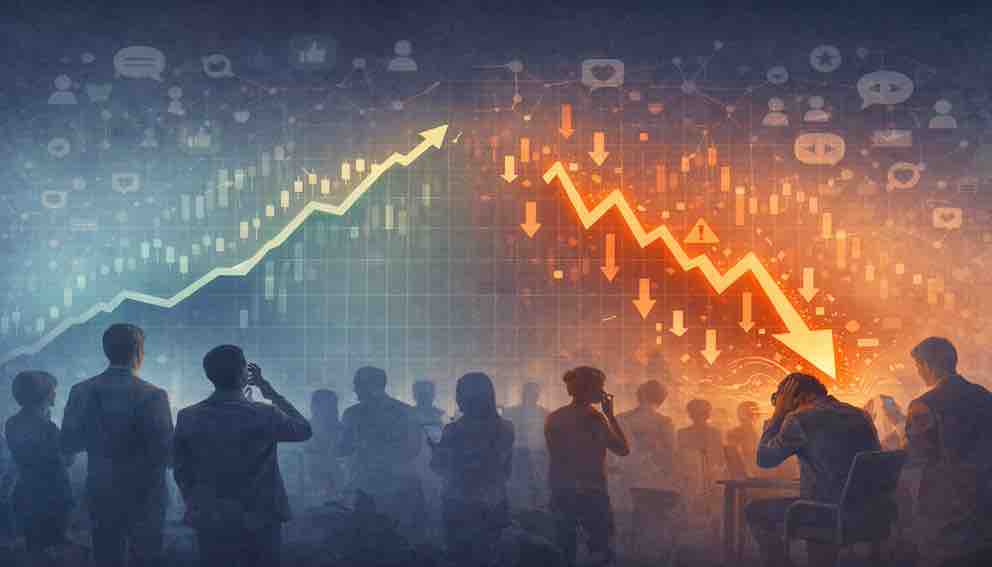
Imagine buying a stock not because it makes sense, but because everyone around you is buying it. Or feeling the urge to sell during a market dip, even when your long-term plan hasn’t changed, just because the news and your peers are panicking. Investing is often taught as a rational, numbers-based activity: analyze, calculate, decide. But in reality, our financial choices are deeply social. Friends, colleagues, media, and society at large exert subtle—but powerful—influences on what we buy, sell, and hold.
In this tutorial, we explore how social pressure, status-seeking, and societal expectations shape financial decisions, why these forces matter, and how you can protect yourself from their often costly effects. We’ll weave together research, historical examples, and practical frameworks so that even a beginner can recognize these influences and make smarter, more resilient investment choices.
The Invisible Hand of Social Influence
Humans are wired to look to others for guidance. In finance, this manifests in ways that can override logic:
- Peer Influence: When friends, colleagues, or online communities invest in a stock, crypto, or fund, the desire to belong or not miss out can push you to follow—even when your own analysis says otherwise.
- Social Proof: Seeing hundreds of people buying or promoting an asset creates a sense of validation. The more visible the action, the more compelling it feels.
- Herding Amplified by Technology: Online platforms and social media make investing social. Price charts, trending tickers, and influencer posts turn investing into a communal experience.
Quantitative Evidence: The 2025 DALBAR Report highlights the cost of socially-driven, emotionally reactive investing. In 2024, the average equity fund investor earned 16.54%, while the S&P 500 returned 25.02%—an 8.48% gap due primarily to chasing trends and panic selling. Social and emotional influences were a major driver of this “behavior gap.”
Historical Example: Bitcoin’s 2017 surge from $1,000 to nearly $20,000 wasn’t driven solely by fundamentals. Many investors followed friends, forums, and social media signals—a classic case of informational cascades (Bikhchandani, Hirshleifer, Welch). Rational individuals ignored their own research, assuming others had superior knowledge, creating a self-reinforcing crowd.
Modern Insight: Social pressure triggers quick, automatic reactions in our minds (System 1), which are emotional and fast. If we’re not careful, these impulses can overpower our slower, more thoughtful, and logical thinking (System 2). Being aware of this clash between fast emotions and deliberate reasoning is the first step in resisting social influence.
Conspicuous Consumption and Status Signaling
Money is not just a tool—it is a signal. Across time and cultures, humans have used wealth to display status, competence, or belonging. This affects financial behavior in several ways:
- Conspicuous Consumption: Buying luxury goods, real estate, or high-profile investments to signal wealth.
- High-Risk Signaling: Taking bold financial risks to appear sophisticated or daring.
- Identity-Based Investing: Choosing assets that reinforce the image you want to project (e.g., tech-savvy investor, bold risk-taker).
Historical Example: The 1920s U.S. stock boom saw widespread participation from investors who often lacked deep knowledge but wanted to signal modernity and success. Buying stocks was a social statement as much as an investment.
Modern Example: Private equity or cryptocurrency communities often reward high-risk, high-visibility investing. Those who hold prestigious, trendy assets signal competence and status, even if the risk outweighs the rational expected return.
Quantitative Link: Status-driven behavior contributes to the DALBAR behavior gap. Buying high and selling low—often triggered by social comparison and reputation concerns—is expensive in measurable terms. The 8.48% annual underperformance gap is a real cost of trying to “keep up” socially.
Reputational Risk and Identity-Based Decisions
Even without explicit pressure, reputational concerns and personal identity shape choices:
- Fear of Judgment: Many investors cling to underperforming assets to avoid admitting mistakes publicly.
- Social Accountability: Public trading or posting gains increases pressure to conform to popular opinion.
- Identity Alignment: Investments are often selected to reflect who you want to appear as, not purely expected value.
Historical Example: During Japan’s asset bubble in the 1980s, executives and professionals invested heavily in stocks and real estate to maintain social status. Selling early might have been rational but could signal weakness or prudence—something socially costly.
Insight: Social and reputational pressures can lead even skilled investors to overexpose themselves or deviate from a disciplined strategy.
How Social Pressure Can Break Plans
Social forces can sabotage even the best investment strategies:
- Herding During Booms: Seeing others succeed encourages overconfidence and risk escalation.
- Abandoning Strategy During Crises: Fear of social judgment often amplifies panic, leading to selling at the worst time.
- Emotional Amplification: Language and framing amplify social influence. Calling a 20% dip a “market crash” triggers stronger emotional reactions than calling it a “temporary fluctuation.”
Historical Illustration:
- Dot-com Bubble (1999–2000): Investors were caught up in hype and social validation, chasing tech stocks at irrational valuations.
- COVID-19 Crash (March 2020): Framing, media, and social chatter turned a market dip into perceived catastrophe, prompting widespread panic selling.
Theory: Shared fear and greed create an emotional crowd, a psychological state where collective emotions override individual judgment. Recognizing this is crucial for maintaining discipline.
Practical Frameworks to Resist Social Influence
Awareness is not enough; investors need practical tools to protect themselves.
Build Social Immunity into Your Process
- Predefine rules for risk, position sizes, and types of investments.
- Use pre-mortems to anticipate social-driven mistakes.
- Apply kill criteria for impulsive trades or trend-chasing.
Focus on Internal Benchmarks
- Measure performance against personal long-term goals, not peers.
- Use anonymized tracking to avoid social comparison.
- Ask: Am I making this decision for expected value or for social approval?
Pause Before High-Visibility Actions
Before publicizing a trade or investment, ask:
- Source Check: Am I influenced by someone’s status rather than my own analysis?
- Emotion Check: Am I feeling urgency or excitement tied to others doing it?
- Identity Check: Is this choice aligned with my financial goals or my desired image?
- Silence Check: Have I considered the most credible counter-argument, or am I in an echo chamber?
Environmental Design
- Apply Nudge Theory to reduce triggers: unfollow influencers, avoid real-time comparison apps, curate a long-term-oriented information diet.
Reframe Social Loss
- Transform FOMO into a strategic opportunity: missing a trend is avoiding risk, not losing out.
Optionality and Barbell Thinking
- Balance high-risk or status-driven investments with low-risk, resilient positions.
- Protect your long-term goals from being swayed by social influences.
Integrating Social Awareness into Mental Models
Social dynamics intersect with other behavioral finance concepts:
- Herd Behavior & Emotional Contagion: Social influence amplifies fear and greed.
- Contrarian Thinking: Awareness of social pressures allows informed deviation from the crowd.
- Outcome vs Decision Quality: Focus on disciplined process, not short-term social validation.
- Strategic Inaction: Sometimes doing nothing is the best defense against social noise.
System 1 vs System 2: Social triggers are fast and emotional. The frameworks above act as System 2 tools—deliberate, analytical, and reflective—intervening in these automatic reactions.
A Social Influence Diagnostic: Pre-Investment Checklist
Use this before any investment decision:
- Source Check: Am I influenced by others’ status?
- Emotion Check: Am I reacting to excitement or fear amplified by peers or media?
- Identity Check: Does this investment reflect my financial goals or my social image?
- Silence Check: Have I considered counterarguments?
- Environment Check: Does my environment (apps, social feeds) encourage impulsive decisions?
Answering honestly helps uncover hidden social pressures and prevent costly mistakes.
Conclusion
Social pressure, status, and identity shape financial behavior in ways that are subtle, pervasive, and measurable. Left unchecked, they can lead to herd-driven losses, panic selling, and strategy deviation.
But social awareness is actionable. By designing decision processes, reflecting on motivations, reframing “loss,” and using structured diagnostic tools, investors can resist social influence while still participating in the market.
This is not about becoming isolated or indifferent—it is about creating mental and environmental filters between social pressures and your decision-making. The result is a more disciplined, patient, and antifragile investment approach.
Remember: Social pressure sparks quick, emotional System 1 reactions. Your strategies—like checklists, reflection exercises, and thoughtful design of your environment—are System 2 tools that help you pause, think carefully, and make deliberate choices.
About Swati Sharma
Lead Editor at MyEyze, Economist & Finance Research WriterSwati Sharma is an economist with a Bachelor’s degree in Economics (Honours), CIPD Level 5 certification, and an MBA, and over 18 years of experience across management consulting, investment, and technology organizations. She specializes in research-driven financial education, focusing on economics, markets, and investor behavior, with a passion for making complex financial concepts clear, accurate, and accessible to a broad audience.
Disclaimer
This article is for educational purposes only and should not be interpreted as financial advice. Readers should consult a qualified financial professional before making investment decisions. Assistance from AI-powered generative tools was taken to format and improve language flow. While we strive for accuracy, this content may contain errors or omissions and should be independently verified.