
Tutorial Categories
Last Updated: February 13, 2026 at 13:30
Hedging: When Risk Management Becomes Illusion – Understanding Derivatives, Governance, and True Protection
Hedging is often portrayed as the ultimate safety net in finance, but in reality, it is a trade, not a guarantee. This tutorial explores how corporate managers use derivatives to protect operations, when hedging adds real value, and when it only masks risk with hidden dangers. Using practical examples from farmers, exporters, and high-profile corporate failures, we show why hedging requires deliberate thought, governance, and alignment with business objectives. By the end, you will understand how to distinguish between true protection and illusion, and how to make informed hedging decisions that support corporate resilience.
Walking on the Frozen Lake: An Analogy for Hedging
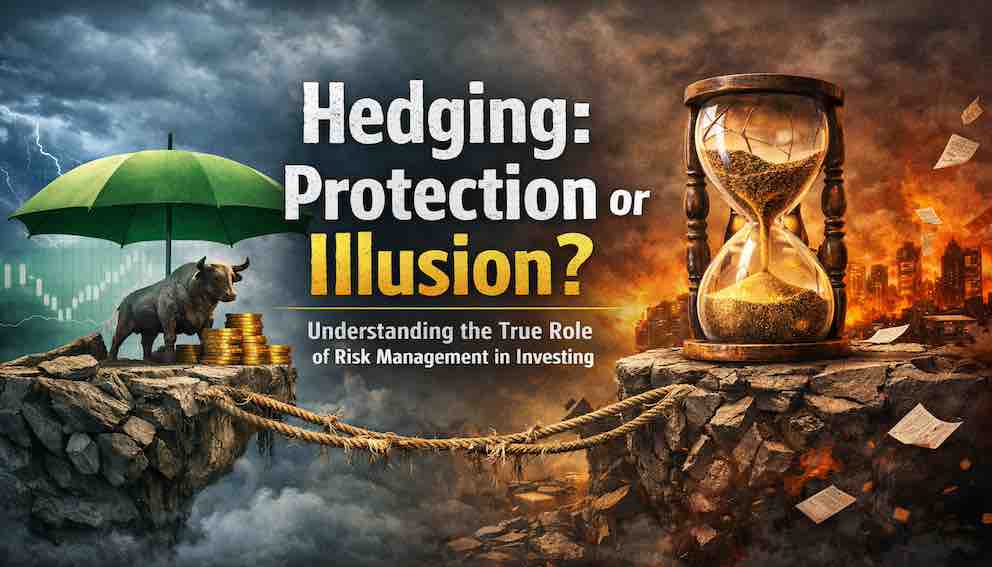
Imagine walking across a frozen lake. The ice looks solid, but beneath the surface, weak spots lurk. Every step carries some risk. Now imagine you tie a rope to a tree on the shore. The rope will not make the ice any stronger, but it offers a chance of rescue if you slip. This is hedging in the corporate world: it does not eliminate risk, but it substitutes one risk for another, providing a buffer against certain dangers.
Too often, hedging is assumed to be an unambiguous good. Investors are praised for it; corporations are called conservative for practicing it. But the truth is more subtle. Hedging is effective only when it is aligned with the risks that matter most to your business, carefully weighed against its costs and the new risks it introduces. Blind hedging can create a false sense of security, leading firms to take risks they think are mitigated but are in fact exposed.
What Hedging Really Means
At its core, a hedge is a defensive position taken to reduce or eliminate a specific financial exposure. It is not a strategy to make money, to outsmart the market, or to show sophistication. Its purpose is protection, not profit.
Consider a simple corporate example:
The Farmer’s Hedge
A wheat farmer expects to harvest 10,000 bushels in six months. The market price of wheat is uncertain. To protect revenue, he sells wheat futures at £5 per bushel.
- If prices fall to £4, he loses £1 per bushel on the market sale, but gains £1 via the futures contract → effective price £5.
- If prices rise to £6, he gains only £1 less than the market would have given him → effective price £5.
The hedge removes price uncertainty but also removes the opportunity to benefit fully from favorable price movements. The value of this hedge depends on the farmer’s circumstances:
- Tight margins or high debt make the hedge valuable, preventing potential ruin.
- Strong liquidity and tolerance for volatility may make remaining unhedged preferable.
The lesson: hedging is not inherently good or bad; it is appropriate only relative to specific objectives and exposures.
When Hedging Adds Value
A hedge adds value when it reduces the probability or magnitude of a loss that would materially harm the company. Hedging simply to reduce discomfort or to “look prudent” does not justify the costs.
Example 1: Export Company Hedging Currency Risk
- Exposure: €10 million in revenue due in six months; costs in GBP.
- Risk: A 10% decline in the euro would reduce profit margins by 4% and could breach debt covenants.
- Hedge: A forward contract to sell euros at a fixed GBP rate.
- Result: Revenue in GBP becomes predictable, allowing the company to plan without fear of covenant breach.
Here, the hedge protects the company from a real financial threat, not from abstract fear.
Example 2: Fixed-Rate Borrower Hedging Interest Rate Risk
- Exposure: £50 million floating-rate loan.
- Risk: A 2% increase in interest rates could eliminate net profits.
- Hedge: Interest rate swap converting floating-rate debt to fixed-rate.
- Result: Payments are predictable, catastrophic shocks are mitigated.
Both examples show that hedging adds value when the downside is significant, and when the hedge aligns with corporate objectives and solvency protection.
Costs of Hedging
No hedge is free. It introduces direct, indirect, and hidden costs:
- Direct costs: Premiums, bid-ask spreads, and financing fees for the hedging instrument(e.g. interest rate swap).
- Indirect costs: Reduced upside or opportunity cost from giving up potential gains.
- Hidden costs: Counterparty risk, operational mistakes, and model failures.
Every hedge should be evaluated against these costs. A hedge that costs more than it protects is, in practice, not a hedge at all—it’s speculation disguised as insurance.
Mental Models for Evaluating Hedges
To navigate hedging wisely, corporate managers can use these guiding questions:
- Substitution Question: What risk am I eliminating? What new risk am I taking on?
- Ruin Question: Does this hedge protect against catastrophic loss, or only normal fluctuations?
- Complexity Question: Could the same protection be achieved in a simpler way?
- Alignment Question: Does the hedge match the size, timing, and nature of the exposure?
- Cost Question: Do the direct, indirect, and hidden costs justify the expected protection?
These questions force managers to think deliberately rather than hedge automatically.
When Not to Hedge
Hedging is not always appropriate. It can be harmful when:
- Exposures are manageable or tolerable.
- Risks are poorly understood.
- The hedge is performed only to impress stakeholders.
- Hidden or new risks introduced by the hedge exceed the company’s ability to manage them.
Sometimes, accepting volatility as a cost of business is wiser than introducing unnecessary complexity.
Structured Examples: Understanding Risks and Trade-Offs
Let’s explore how hedging works in practice through illustrative examples. Each story highlights the risk being mitigated, the new risk introduced, and the considerations for decision-making.
1. Farmer – Wheat Price
A wheat farmer hedges by selling futures contracts to lock in a price for the harvest. The risk eliminated is the possibility of falling market prices that could wipe out expected revenue. The risk introduced is the potential loss of upside—if wheat prices rise, the farmer cannot benefit fully. The key consideration is whether protecting against a potentially disastrous loss outweighs giving up potential gains. For a farmer with tight margins, the hedge provides essential security; for one with ample financial flexibility, it may be less necessary.
2. Export Company – Currency Risk
An export company expects €10 million in revenue in six months but has costs in GBP. The risk eliminated is the fluctuation of the euro against the pound, which could reduce profits or breach debt covenants. The risk introducedincludes counterparty risk (the chance the other party fails to deliver) and basis risk (small mismatches between hedge and exposure). The consideration is whether predictable revenue and covenant protection are worth the costs of hedging. Here, the hedge aligns with the company’s operational and financial objectives, making it valuable.
3. Fixed-Rate Borrower – Interest Rate Risk
A company has a £50 million floating-rate loan. Rising interest rates threaten profitability. The risk eliminated is the financial shock from a sudden spike in rates. The risk introduced may be slightly higher average interest costs over time, and the consideration is whether the predictable payments and protection against catastrophic outcomes justify the cost of entering an interest rate swap.
Key Insight:
All hedging decisions involve trade-offs. They are not about eliminating risk completely but about understanding which risks are critical, which are manageable, and which new risks are acceptable in exchange for protection. Thinking of each hedge as a story rather than a formula helps managers weigh costs, benefits, and trade-offs in a practical, real-world context.
Hedging with Purpose: What an Astute Manager Chooses to Protect
An astute manager does not hedge every possible risk, nor does she hedge indiscriminately. Instead, she carefully evaluates which exposures could threaten the firm’s operational viability, financial stability, or strategic objectives if left unaddressed. Hedging is most valuable when it protects against material or catastrophic losses, such as a sudden collapse in key commodity prices, a sharp and sustained currency devaluation, or an unexpected spike in interest rates that could breach debt covenants. Minor fluctuations, which the firm can absorb without jeopardy, are often best left unhedged, because attempting to cover every movement can introduce unnecessary complexity, cost, and new risks. The wise manager asks herself: “Which risks, if realized, would harm the business in ways that are difficult or impossible to recover from?” and directs hedging efforts toward those, ensuring that each hedge serves a clear, economically justified purpose, rather than acting as a reflexive attempt to eliminate all uncertainty.
Integrating Hedging into Corporate Risk Management
Modern financial management rarely treats hedging in isolation. Leading firms embed hedging decisions within an Enterprise Risk Management (ERM) framework, which connects treasury, operational, strategic, and compliance risks.
Example: A supply chain disruption affects revenue, working capital, and lender confidence simultaneously. A hedge can mitigate part of the financial impact, but the organization must consider interconnected risks across departments.
- ERM ensures that hedging decisions are aligned with overall corporate strategy rather than siloed objectives.
A Practical Illustration: The Uncertainty Buffer
Consider two manufacturing firms, each with $100 million in revenue:
- Firm A: Maintains $15 million in cash and an undrawn $20 million credit line.
- Firm B: Maintains only $5 million in cash and relies on short-term commercial paper.
In normal conditions, Firm B seems more efficient: higher returns and lower funding costs. But during the 2008 commercial paper freeze, Firm B faced immediate distress, while Firm A continued operating. The difference was resilience, not efficiency—a direct reflection of how hedging and liquidity buffers protect against the unknown.
Conclusion: Protection or Illusion?
Hedging is not a shield; it is a mirror. It reflects your understanding of your business, the risks that truly matter, and your tolerance for uncertainty.
A hedge is protection when:
- It addresses material or catastrophic risk.
- Costs are reasonable relative to the harm prevented.
- Introduces no unmanageable new risks.
- Governance and oversight are strong.
A hedge is illusion when:
- It addresses discomfort rather than real exposure.
- Costs exceed expected benefits.
- Hidden risks are ignored.
- Complexity masks speculation as protection.
The goal of hedging in corporate finance is not to eliminate all risk—which is impossible—but to make informed, deliberate decisions about which risks to mitigate and which to accept.
The company that hedges with full understanding—knowing what it is protecting and what it is giving up—is practicing wisdom. The company that hedges blindly is practicing ritual, not prudence.
Practical Takeaways for Financial Managers
- Assess the economic justification for every hedge, not just the perceived comfort it provides.
- Evaluate all costs, including hidden ones like counterparty and operational risk.
- Ensure governance and oversight: management and boards must understand hedging rationale.
- Embed hedging in ERM: consider interconnected operational, financial, and strategic risks.
- Maintain flexibility and liquidity: hedging is more effective when the company has buffers to survive unexpected shocks.
- Avoid complexity for appearance: simplicity often reduces unrecognized risks.
About Swati Sharma
Lead Editor at MyEyze, Economist & Finance Research WriterSwati Sharma is an economist with a Bachelor’s degree in Economics (Honours), CIPD Level 5 certification, and an MBA, and over 18 years of experience across management consulting, investment, and technology organizations. She specializes in research-driven financial education, focusing on economics, markets, and investor behavior, with a passion for making complex financial concepts clear, accurate, and accessible to a broad audience.
Disclaimer
This article is for educational purposes only and should not be interpreted as financial advice. Readers should consult a qualified financial professional before making investment decisions. Assistance from AI-powered generative tools was taken to format and improve language flow. While we strive for accuracy, this content may contain errors or omissions and should be independently verified.